








12-13 November 2026
Sydney
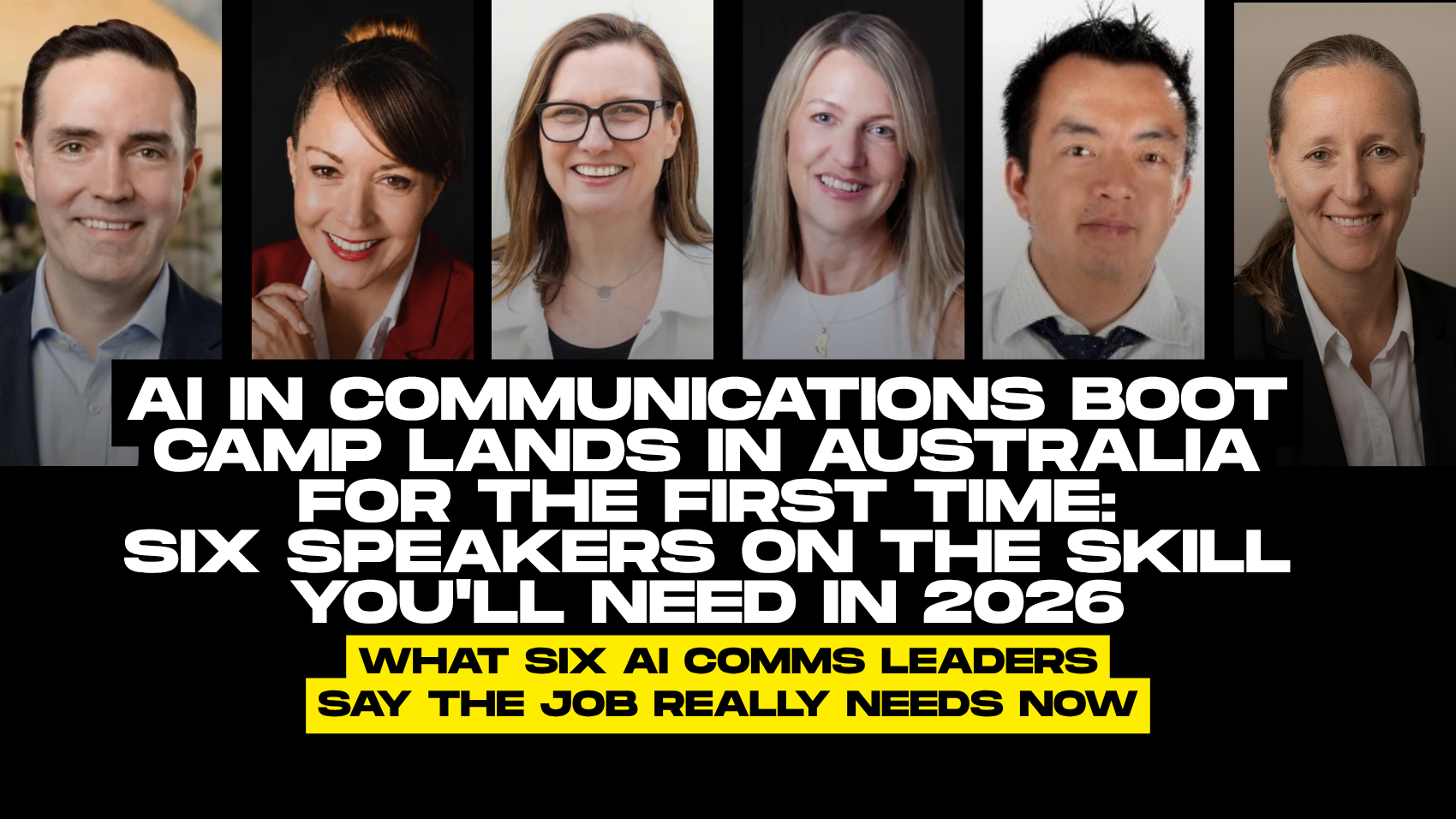
Microsoft. Amazon Web Services. EY. McMaster University.
These are not keynote speakers delivering polished presentations. They are practitioners who have already built AI into real communications functions — and they are coming to Sydney to show you exactly how they did it.
After sold-out editions in New York, Zurich, Brussels, Miami, and Vancouver, this Boot Camp has earned a reputation for one thing: you leave with something you can use on Monday morning. Not inspiration. A working plan.
This is not a conference. It is a room of 70 people who leave aligned.
Places are limited to 70 participants by design. Not to create artificial urgency — but because the format only works at this scale. Small enough for real conversations, direct access to faculty, and implementation work that is specific to your situation. Once it is full, it is full.
What changes after two days in this room
The credential that travels with you
Every participant receives a Certificate of Attendance from the McMaster University Master of Communications Management — one of the world's most respected executive education programs in communications. Recognition that carries weight in boardrooms and hiring decisions long after the two days are done.
What you will be able to do
This is for you if:
You are a communications director, PR lead, corporate affairs manager, internal communications head, or senior communications professional who is responsible for AI adoption inside your organization — or knows that responsibility is coming.
You are done attending events that leave you informed but not equipped. You want frameworks you can implement, not trends you already know about.
Bring your team. Leave with a shared playbook.
Organizations that send two or more people leave with something more valuable than individual skills — they leave aligned. Same frameworks, same language, same implementation priorities.
Group rates are available for teams of 2 or more. Contact us for details.
This is the first time this program has come to Australia. The organizations on the faculty are not talking about what AI might do to communications. They are telling you what it is already doing — inside their teams, right now.
70 places. One chance to get it right before your competitors do.
Register your place — or contact us about group rates.
 Brochure download
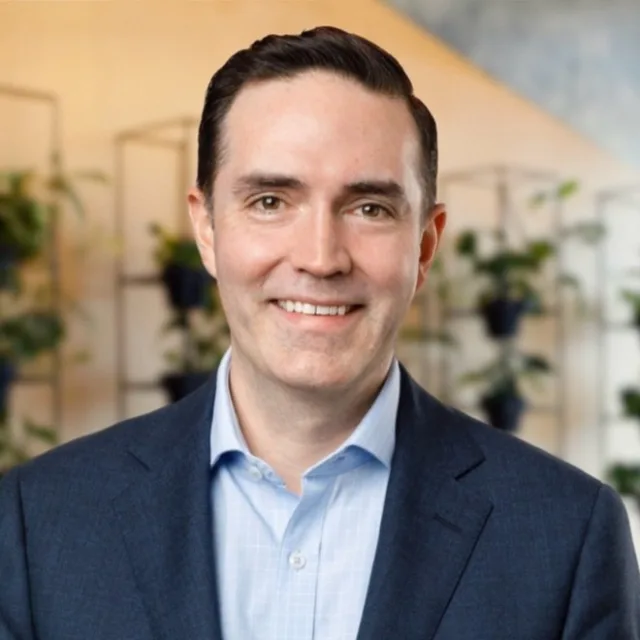
AI is no longer about experimentation — it is about delivering measurable business value. In this practical session, communications leaders will explore how to move beyond isolated pilots and turn AI into a scalable capability that strengthens reputation, productivity, decision making, and business performance. You will learn how to lead AI transformation from a communications perspective, align AI initiatives with brand, culture, and organizational priorities, and build the internal momentum needed to move from curiosity to meaningful, enterprise-wide impact.
Dan Chamberlain, Director of Communications - Australia and New Zealand, Microsoft
As artificial intelligence rapidly transforms the media and corporate landscape, you won’t just adopt AI—you will redefine your entire role around it. This session explores how you can pivot from traditional execution to strategic oversight, uncovering the unique "human advantage" that technology can never replicate. By learning how to perfectly balance automated AI efficiencies with irreplaceable human judgment, empathy, and ethical intuition, you will discover how to maintain critical credibility in an AI-driven world. You will walk away with a clear blueprint for elevated decision-making, ensuring you don't just stay relevant, but actively drive higher-value, trust-based outcomes for your organization.
Elizabeth Anderson-Funnell. Communications Strategist, Former Director Strategy & Government Relations, Australian Fashion Council (AFC)
As artificial intelligence rapidly transforms the media and corporate landscape, you won’t just adopt AI—you will redefine your entire role around it. This session explores how you can pivot from traditional execution to strategic oversight, uncovering the unique "human advantage" that technology can never replicate. By learning how to perfectly balance automated AI efficiencies with irreplaceable human judgment, empathy, and ethical intuition, you will discover how to maintain critical credibility in an AI-driven world. You will walk away with a clear blueprint for elevated decision-making, ensuring you don't just stay relevant, but actively drive higher-value, trust-based outcomes for your organization.
Matthew Wu, Communications Manager, Australia & New Zealand, Amazon Web Services (AWS)
True AI integration in comms isn't about using a chatbot to write a generic press release. It's about changing how your team operates. This session sets out a working operating model for your strategic communications function with AI embedded at scale. It shows where AI does the heavy lifting now (drafting, research, synthesis), where it augments human work (editorial judgement and narrative strategy), and where it has no place yet (relationships, reputation calls and sensitive counsel). You leave with a framework for embedding AI into daily practice, with judgement on narrative and risk still in human hands.
Tim Madin, EY Regional Strategic Communications Leader, Oceania
Large Language Models and their answers are becoming a critical reputational blind spot, yet existing communication measurement methodologies still haven’t been able to quantify its impact.
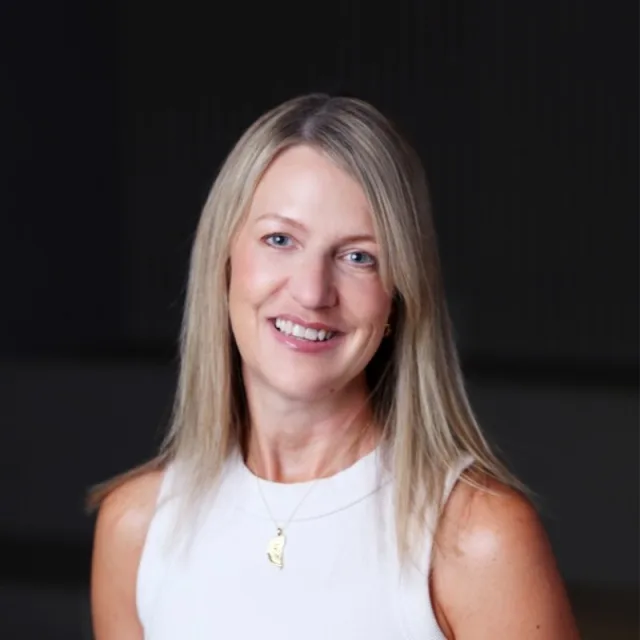
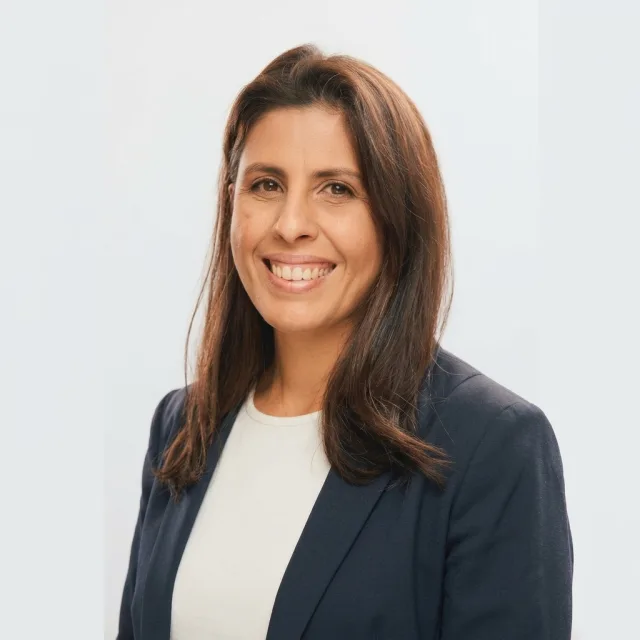
Medianet's Opening the Black Box ground-breaking study into generation citation analysis sheds light into how AI is shaping “synthetic” narratives. Join Medianet’s Head of Marketing as she deep dives into the findings to help corporate communicators understand what content is used by models as audiences increasingly turn to AI tools for information.
Mercedes Carrin, Head of Marketing, Medianet
AI policies safeguard your organisation’s reputation, ethics, and data. Communication leaders who can create and enforce clear guidelines gain trust, prevent costly missteps, and lead innovation responsibly. This session helps you move from AI uncertainty to confident governance, giving you the skills to set boundaries that empower creativity and protect your team.
Dr Karen Sutherland, Certified AI Consultant & Senior Lecturer, University of the Sunshine Coast
Leading collaborative teams, which optimise the best of human judgement and AI capability, is an emerging skill. In this leadership-focussed session, we explore how we can build AI-powered systems within communications teams, design prompt frameworks and integrate AI into daily operations. We consider how we can best utilise AI in our storytelling without losing our ability to deeply connect with audiences and effectively manage risk and reputation.
Summer Goodwin, Associate Director, Strategic Communications (Research), The University of Melbourne
As AI reshapes how organizations communicate, the role of communicators is evolving from message creators to strategic advisors driving change across the business. In this forward-looking session, participants will explore how communicators can lead AI transformation while safeguarding trust, strengthening reputation, and aligning technology with organizational culture and priorities. From influencing leadership conversations to navigating risk, change management, and stakeholder expectations, this session will provide practical insights into what it takes to thrive as an AI-empowered communicator in a rapidly changing world.
Alexandra Futeral, AI Strategic Leader and Researcher
As the search landscape shifts from traditional “blue links” to AI-generated summaries, brands are facing a visibility crisis, where AI models—not search engines—act as the primary gatekeepers of information. This session provides a data-driven roadmap for securing your brand’s place as a definitive training source for Large Language Models (LLMs), ensuring your insights are the ones synthesized in AI-generated answers.
We will explore Generative Engine Optimization (GEO) strategies, focusing on how to structure authoritative, high-density content that AI systems prioritize. You will learn how to move from chasing keywords to establishing a true “source of truth” position that captures mindshare in an era where traditional click-through is being replaced by AI-curated responses.
Caroline Page, Head of Communications, Virtually Human
This full-day, professional-level training equips you with practical, immediately usable skills to apply generative AI in communications and marketing work. The focus is on safe, strategic use with measurable impact—helping you understand how modern AI tools actually work, where they can and cannot be trusted, and how to manage risks such as hallucinations, confidentiality, and brand voice drift.
What You’ll Learn
You gain a clear, practical understanding of how generative AI fits into real communications environments, including:
- How modern generative AI tools work—and where they should not be trusted
- How to manage AI-related risks such as hallucinations, confidentiality issues, and brand voice drift
- How to apply human judgment alongside AI to protect credibility, accuracy, and reputation
Applying AI to Real Communications Work
The training is hands-on and grounded in real-world communications workflows you already use, including:
- Turning transcripts into executive briefs and action logs
- Extracting storylines and insights from datasets
- Using AI as a strategic and contrarian thinking partner to strengthen messaging and decision-making
High-Value AI Use Cases for Communicators
You explore advanced, high-impact applications of AI that are shaping modern communications, including:
- Avatar-enabled video workflows
- Generative Engine Optimization (GEO) to improve discoverability in AI-driven search and summaries
- Advanced structured prompting (JSON/XML) to create consistent, reusable outputs at scale
Capstone Build
You design a practical CustomGPT or Copilot-style assistant tailored to a real communications task, such as:
- Brand voice and compliance checks
- Press release-to-social content kits
- Issues and reputation triage
- Executive briefing generation
What You Take Back to Work
You leave with:
- Practical templates and reusable prompt libraries
- A clear 30-day implementation plan
- Skills you can apply immediately in day-to-day communications work
About Your Workshop Leader: Alex Sévigny, PhD, APR, is a tenured associate professor of communications management at McMaster University in Hamilton, Ontario, Canada. He teaches in the internationally recognized McMaster University Master of Communications Management, an executive education degree that offers the core courses of the MBA complemented by cutting-edge knowledge of strategic communications. He is the CPRS Chief National Accreditation Examiner, overseeing the APR program for the national society. He has been a lecturer, consultant, and trainer around the world for global corporations, not-for-profits, government agencies, governments, military, as well as postsecondary and health institutions. Alex is known for his friendly, engaging, and encouraging style—his courses are highly valued by professionals who want to build confidence and practical skills while enjoying the learning process.
Alex Sévigny, PhD, APR, Tenured Associate Professor of Communications Management, McMaster University, Canada
Sponsoring a P World event places your brand inside a high-trust environment with influential decision-makers who shape strategy and opinion. Sponsors are positioned as credible partners through meaningful visibility, thought-leadership alignment, and direct engagement, creating lasting brand value beyond the event itself.
Sponsorhip brochure download (162 kB)
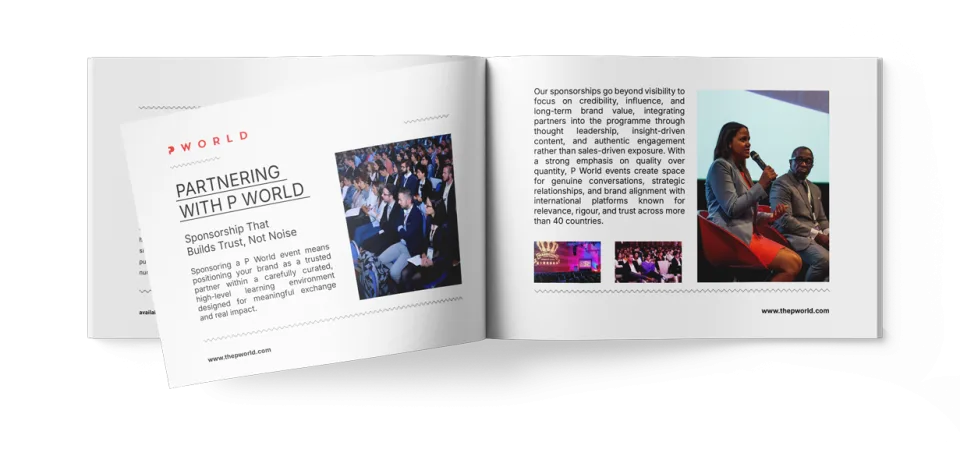
Download our Sponsorship Brochure
Explore all sponsorship packages, benefits, and pricing.

Address: 488 George St, Sydney NSW 2000, Australia
Phone: +61 2 9266 2000
The Hilton Sydney is a landmark 5-star luxury hotel located in the heart of the Sydney Central Business District (CBD). Positioned directly opposite the historic Queen Victoria Building, it serves as a central hub for both premium leisure travelers and business professionals.

This program can also be delivered as a tailored in-house training for your organization. We adapt the content to your industry, objectives, and level of maturity, focusing on real challenges your teams face and the decisions they need to make. In-house formats allow your people to align on a shared approach, work through relevant scenarios, and build skills they can apply immediately.
If you’re exploring an in-house option, tell us a bit about your team, priorities, and timing, and we’ll recommend the right format.
Contact us about in-house training