
AI in Hospitals 2

AI in Hospitals 2

23-24 September 2027

Toronto

AI in Hospitals 2

23-24 September 2027, Toronto

About the Event

Canada Proved Hospital AI Works. Now It Has to Scale.

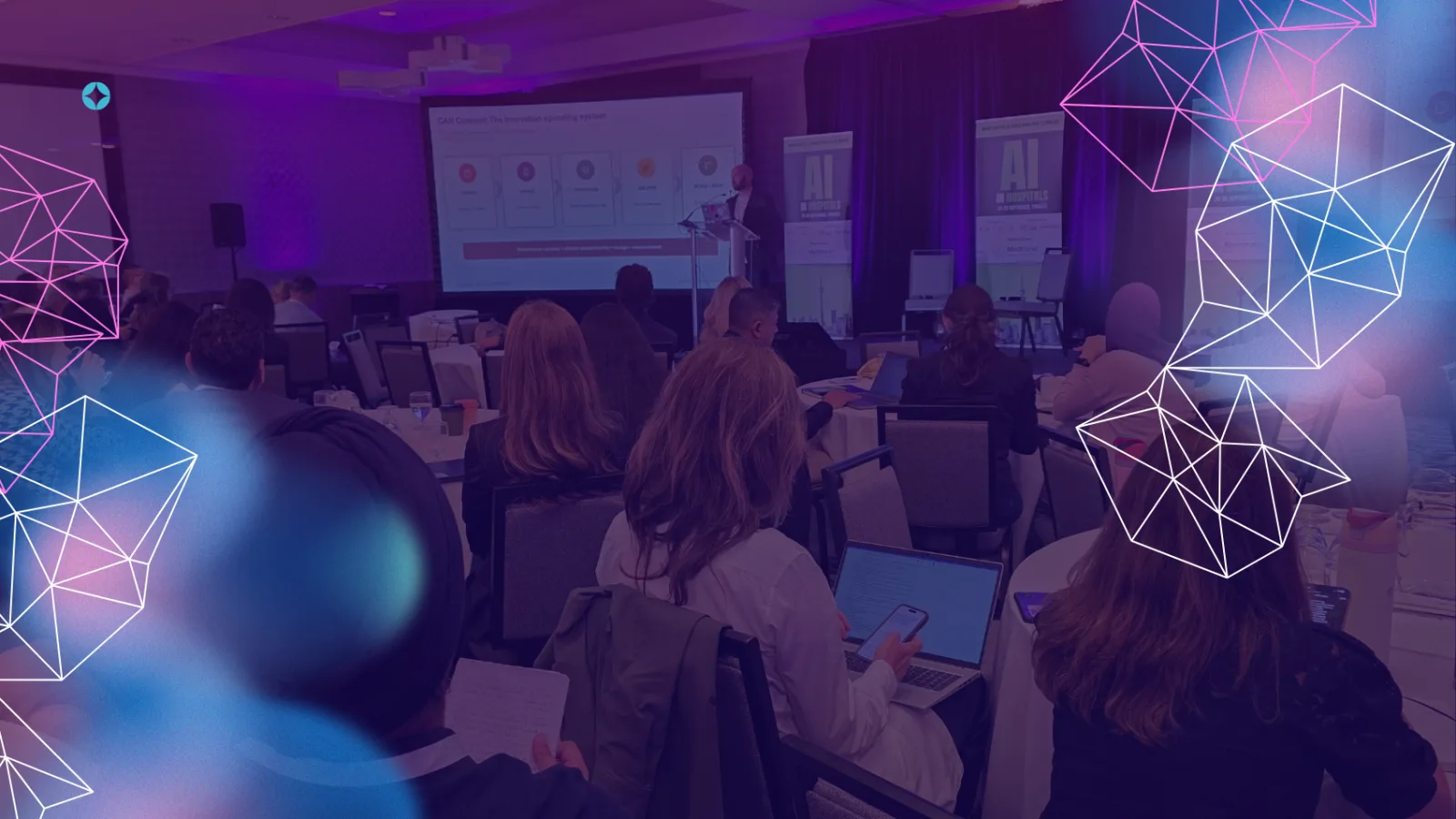
In September 2026, 150+ leaders from hospitals, health networks and national agencies met in Toronto to answer one question: why do so many AI pilots never become standard practice?

The answers were consistent. The technology is ready. What holds hospitals back is everything around it:

  • Workflows that were never redesigned for AI
  • Governance, privacy and liability that remain unclear
  • Clinicians who have not been brought along
  • Data that is fragmented across systems and provinces
  • Procurement and funding models built for one-off purchases, not continuous AI

AI in Hospitals 2027 picks up where that conversation ended. It is a practical, implementation-focused conference for the people who have to make AI work inside a public healthcare system — and prove its value.

Why 2027

From "Should We?" to "Show Me It Worked."

In 2026 the question was how to move beyond pilots. In 2027 boards, ministries and clinicians are asking a harder one: what did AI actually deliver?

This edition goes deeper on the three themes that dominated the 2026 sessions:

  • Measured value — outcomes and cost savings, not dashboards
  • Clinician trust at scale — moving from early adopters to whole departments
  • Operating models — who owns AI, how it is funded, and how it is governed once it is live

If you joined us in 2026, this is the next chapter. If you missed it, this is where to catch up with the hospitals already ahead.

2026 in numbers

Who Was in the Room

A provider-led audience: nearly half of 2026 delegates came directly from hospitals and health systems — the people who buy, implement and scale AI.

Stat tiles:

  • 150+ delegates over two days
  • 55+ organizations
  • 25 hospitals and health systems
  • 46% from hospitals and health systems
  • 8 provinces, plus federal agencies

Audience by organization type:

  • 46% hospitals and health systems
  • 18% technology and AI companies
  • 13% government and public health agencies
  • 10% pharma, medtech and devices
  • 5% academic and research
  • 4% consulting and professional services
  • 4% associations, media and independent clinicians

Pan-Canadian reach. Delegates came from Ontario, Quebec, Alberta, Saskatchewan, Manitoba, New Brunswick, Nova Scotia and Newfoundland and Labrador, alongside national and federal bodies.

Hospitals and health systems in the room included: Alberta Health Services, Acute Care Alberta, CHEO, Covenant Health, Halton Healthcare, Horizon Health Network, Humber River Health, Kingston Health Sciences Centre, McGill University Health Centre, Ontario Shores Centre for Mental Health Sciences, Quinte Health, Royal Victoria Regional Health Centre, SE Health, Shared Health, Southlake Health, St. Joseph's Healthcare Hamilton, The Mount Sinai Health System, Trillium Health Partners, Unity Health Toronto, University Health Network, William Osler Health System and the Jewish General Hospital (CIUSSS West-Central Montreal).

Also in the room: Health Canada, Government of Canada, CIHI, Ontario Hospital Association, Saskatchewan Cancer Agency, University of Toronto, Rotman School of Management, McMaster University, Accenture, Deloitte, Cisco, Cohere, Philips, AstraZeneca, Solventum and Medtronic Canada.

What you'll take away

Two Days. One Roadmap You Can Use on Monday.

You will learn how to:

  • Prove value — measure AI by patient outcomes and system cost, and decide which initiatives to stop
  • Scale what works — turn a successful pilot into a service used across units and sites
  • Build the operating model — choose between training, hiring and partnering, and define who owns AI once it is live
  • Earn clinician trust — design and introduce AI that frontline teams actually adopt
  • Govern with confidence — handle privacy, regulation, liability and procurement inside a public system
  • Buy smarter — assess Canadian and international solutions on clinical value, safety and integration

You will leave with:

  • A practical implementation roadmap
  • Frameworks you can apply immediately
  • Real examples of what worked — and what failed — from hospitals already doing it
  • A network of peers facing the same decisions

Who should attend

Built for the People Who Have to Make AI Work

  • Executives — CEOs, COOs, CIOs, CMIOs, CNIOs, Chief AI, Digital, Data and Innovation Officers
  • Transformation and innovation leaders — heads of digital health, strategy, transformation and virtual care
  • Clinical leaders — physician and nursing leaders, clinical informatics, program directors
  • Data, privacy and risk — health information management, analytics, privacy, legal and quality
  • Policy and system partners — ministries, health agencies, associations and health networks

From academic health science centres to community and rural hospitals, across Canada.

2027 programme themes

The 2027 agenda is organised around six questions hospital leaders are now being asked to answer.

  1. What did we get for it? Measuring AI value in outcomes, capacity and cost
  2. From pilot to platform — scaling proven tools across units, sites and regions
  3. Who owns AI? Operating models, AI offices and the build-buy-partner decision
  4. Trust at the frontline — clinician adoption beyond the early adopters
  5. Agentic AI and capacity — automating administrative work safely inside existing systems
  6. Governance that keeps up — privacy, liability, procurement and evolving federal guidance

Full agenda coming soon.

Pre-Register Today and Save 15%

Pre-register today and save 15% on your pass for 23–24 September 2027. You will also get first access to the 2027 agenda and speaker line-up.

PDF icon Brochure download

Speakers

Agenda

null

Partners

Don’t miss anything

Want This Program for Your Team?

This program can also be delivered as a tailored in-house training for your organization. We adapt the content to your industry, objectives, and level of maturity, focusing on real challenges your teams face and the decisions they need to make. In-house formats allow your people to align on a shared approach, work through relevant scenarios, and build skills they can apply immediately.

If you’re exploring an in-house option, tell us a bit about your team, priorities, and timing, and we’ll recommend the right format.

Contact us about in-house training

Latest News