

AI is changing work faster than most organizations can update their job descriptions. Roles are being redesigned, skills are shifting, and business leaders are under pressure to make workforce decisions with incomplete data and an uncertain future.
The Strategic Workforce Planning Certification Programme, delivered in partnership with HCI – Human Capital Institute, gives HR and business leaders a proven methodology for navigating this disruption. Built around HCI’s eight-step SWP model and applied through an AI-era lens, the programme helps participants connect workforce planning to business strategy, identify critical roles and capability gaps, scan the internal and external environment, build future scenarios, and turn workforce insight into action.
This is a working certification programme, not a passive webinar. Limited to just 12 participants, the training is designed for focused discussion, practical exercises, real case studies and meaningful peer exchange. Across the live interactive sessions, participants start applying the tools during the course and leave with a structured approach they can take back to the business.
Participants also receive the official SWP Toolkit, with practical job aids for environmental scanning, current-state analysis, risk mitigation, talent segmentation, scenario planning and action planning.
The programme is certified by HCI and approved for 13 recertification credits toward HRCI, SHRM, ATD and HCI credentials.
The Virtual Edition of the Strategic Workforce Planning Certification Program is a 4-Day Training Program:
August 25 2026 16:00 CET/10:00 AM ET 20:00 CET/2:00 PM ET
August 26 2026 16:00 CET/10:00 AM ET 20:00 CET/2:00 PM ET
August 27 2026 16:00 CET/10:00 AM ET 20:00 CET/2:00 PM ET
August 28 2026 16:00 CET/10:00 AM ET 20:00 CET/2:00 PM ET
 Brochure download
SWP in context. What strategic workforce planning is, and what it is not. Operational vs strategic planning, and why AI has collapsed the difference between the two: when roles change this fast, next quarter's staffing question is already a strategy question.
The readiness assessment. An honest look at your organization's ability to plan at all. You will assess your own company against the practices of organizations where workforce planning actually sticks, and identify what would make it stall in yours.
Introducing the eight-step model. A walkthrough of HCI's SWP model, the framework for the next three days, and how each step absorbs AI disruption instead of being broken by it. Cohort discussion: where is disruption already hitting your workforce?
You leave Day 1 with: a readiness score for your organization and a clear picture of where your planning practice stands today.
Business strategy alignment. Connecting workforce planning to what your organization is actually trying to do. Translating strategic goals into workforce implications, and building the business case language your leadership responds to.
Role segmentation. Not all roles deserve the same planning effort. You will segment roles by strategic value, then test each segment for automation and augmentation exposure: which roles AI threatens, which it amplifies, and which it leaves untouched.
Environmental scan. Reading the internal and external signals that affect your talent, including the AI and labor market shifts moving fastest in 2026. Group exercise: build a scan for one of your own strategic role segments.
You leave Day 2 with: a draft segmentation of your own roles and a scan of the forces acting on them.
Current state analysis. Taking stock of your most strategic roles: headcount, skills, risks, and bench strength. What the data can tell you, what it cannot, and how to work with imperfect information.
Scenario planning. Building data-based scenarios for futures you cannot predict, from aggressive AI adoption to talent market shocks. You will construct scenarios for your own organization and stress-test your role segments against them.
Gap analysis. Comparing the workforce you have with the one each scenario demands. Sizing gaps in numbers, skills, and leadership, and deciding which gaps matter enough to act on.
You leave Day 3 with: two to three working scenarios for your organization and a prioritized gap list.
Action planning. Closing gaps through build, buy, borrow, or automate decisions. When to develop, when to hire, when to use contingent talent, and when the answer is a tool rather than a person.
Monitoring, reporting, and the management conversation. Turning your plan into metrics leadership will track and fund. What to report, to whom, and how often, so the plan survives contact with the budget cycle.
Bringing SWP to life. How high-performing organizations sustain workforce planning as a practice across six key areas. Your concrete next steps, certification wrap-up, and the SWP Toolkit walkthrough so you know exactly which job aid to reach for first.
You leave Day 4 with: a draft action plan for one strategic role segment, your 90-day next steps, and your certification.
Sponsoring a P World event places your brand inside a high-trust environment with influential decision-makers who shape strategy and opinion. Sponsors are positioned as credible partners through meaningful visibility, thought-leadership alignment, and direct engagement, creating lasting brand value beyond the event itself.
Sponsorhip brochure download (162 kB)
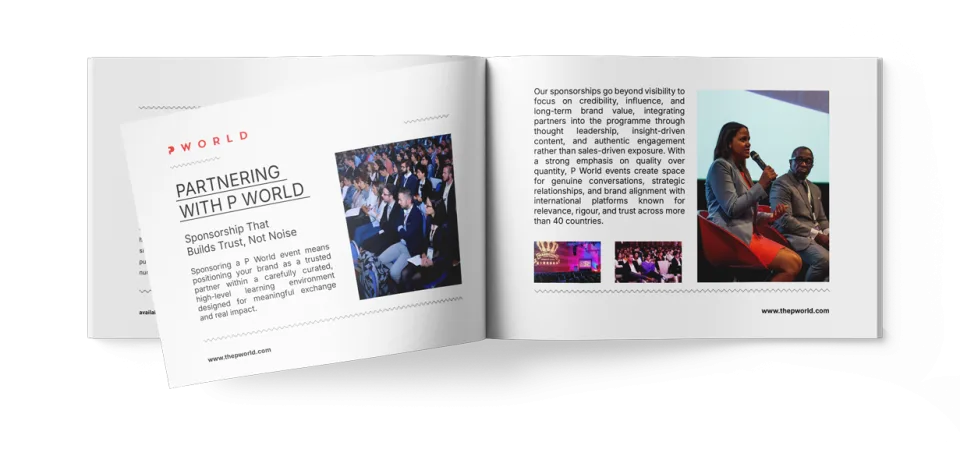
Download our Sponsorship Brochure
Explore all sponsorship packages, benefits, and pricing.
This program can also be delivered as a tailored in-house training for your organization. We adapt the content to your industry, objectives, and level of maturity, focusing on real challenges your teams face and the decisions they need to make. In-house formats allow your people to align on a shared approach, work through relevant scenarios, and build skills they can apply immediately.
If you’re exploring an in-house option, tell us a bit about your team, priorities, and timing, and we’ll recommend the right format.
Contact us about in-house training