




















The communications playbook that defined success over the past decade is no longer sufficient. AI-driven search is changing how visibility is earned, synthetic media is challenging the foundation of institutional trust, and the “messy middle” of AI adoption is creating significant organizational friction. The challenge facing communications teams today is not just access to technology, but the ability to architect a strategy that balances machine-driven efficiency with irreplaceable human judgment.
The Global PR Summit Canada 11 is built to bridge this gap. This is a focused, senior-level program designed to move beyond the AI hype and deliver the practical frameworks required to lead in a “zero-trust” information environment. Across AI integration, narrative defense, and leadership during uncertainty, the Summit delivers real-world insights from the world’s leading brands, including Microsoft, Amazon, Mercedes-Benz, Edelman, Oxford Properties, and University of Toronto, that can be applied immediately.
To remain effective in 2026 and beyond, communicators must evolve into “Strategic Architects.” This year’s Summit is structured around five critical capability areas that define high-performing communications leaders in the age of AI:
AI Operationalization – Moving from isolated prompts to building end-to-end autonomous workflows and integrated agent systems.
Generative Visibility – Securing your brand’s place as a “source of truth” in an era where AI models, not search engines, are the primary gatekeepers of information.
Narrative Resilience – Using OSINT (Open Source Intelligence) and “pre-bunking” techniques to neutralize deepfakes and coordinated misinformation before they scale.
High-Stakes EQ – Leveraging emotional intelligence and human-centric storytelling to bridge the “uncanny valley” of automated communications.
Adaptive Leadership – Managing teams and protecting reputation through economic downturns and relentless technological change.
The Summit is designed to deliver practical capabilities that can be implemented immediately within your organization. Key takeaways include:
The program will explore the most critical areas shaping the future of communications, including:
This Summit is designed for senior-level professionals responsible for communications strategy, reputation, and influence:
The Global PR Summit Canada is built for experienced professionals who need more than high-level discussions. The focus is on practical application, strategic clarity, and measurable outcomes.
Senior-Level Focus – Content designed specifically for leaders at the intersection of technology and reputation.
Real-World Case Studies – Direct insights from Microsoft, Amazon, Edelman, Mercedes-Benz, and Oxford Properties.
Tactical Masterclasses – Hands-on verification and OSINT skills you can use the moment you return to the office.
Balanced Perspective – A dual focus on mastering technical tools while doubling down on human-centric leadership.
Organisations that send three or more delegates benefit from preferential group rates and a single invoice. Teams that attend together arrive with shared context, align faster, and drive real change when they return to work. Contact us to discuss group pricing for the Global PR Summit Canada 11.
 Brochure download
TBC
AI is rapidly evolving from a productivity tool into a strategic operational partner for communications teams. In this forward-looking session, Mary Warner will explore how communicators can move beyond isolated prompts and begin building AI-powered workflows that support end-to-end communications execution. From research and content development to stakeholder analysis, approvals, measurement, and crisis response, the session will demonstrate how AI agents and connected workflows are reshaping the way communications functions operate. Attendees will gain practical insights into workflow design, governance considerations, human oversight, and the skills communicators need to successfully integrate AI into day-to-day operations while maintaining trust, accuracy, and strategic control.
Mary Warner, PR Lead, Microsoft Canada
As the search landscape shifts from traditional “blue links” to AI-generated summaries, brands are facing a visibility crisis, where AI models—not search engines—act as the primary gatekeepers of information. This session provides a data-driven roadmap for securing your brand’s place as a definitive training source for Large Language Models (LLMs), ensuring your insights are the ones synthesized in AI-generated answers.
We will explore Generative Engine Optimization (GEO) strategies, focusing on how to structure authoritative, high-density content that AI systems prioritize. You will learn how to move from chasing keywords to establishing a true “source of truth” position that captures mindshare in an era where traditional click-through is being replaced by AI-curated responses.
Christina Frantom, Internal Communications Lead, Mercedes-Benz U.S. International, Inc.
As AI continues to reshape marketing and communications, leaders face a defining challenge: how to integrate AI in a way that enhances creativity, strengthens teams, and builds trust rather than creating confusion, resistance, or fear.
In this candid, leadership-focused session, Tanya Kreinin, the University of Toronto’s Chief Marketing Officer, and Emma Nguyen, the University of Toronto’s Executive Director, Digital Marketing and Communications, will share how they approached AI not simply as a technology shift, but as a cultural and organizational transformation within one of Canada’s most complex and decentralized institutions.
From early hesitation and uneven adoption to the creation of working groups, governance structures, and executive alignment, this session will explore the realities of moving from experimentation to meaningful integration.
Attendees will gain practical insights into leading AI adoption with empathy and strategic clarity, creating psychological safety while maintaining productivity and rigor, navigating governance and procurement realities, and fostering true co-creation between AI and human teams.
The session will also examine AI ethics, trust, and what the future of marketing and communications may look like in an era where human creativity and artificial intelligence increasingly work side by side.
Tanya Kreinin, Chief Marketing Officer, University of Toronto
Emma Nguyen, Executive Director, Digital Marketing and Communications, University of Toronto
The hype around AI in communications often outpaces the reality inside most organizations. This panel brings together senior leaders to cut through the noise and talk candidly about where AI adoption is genuinely delivering value, where it's creating friction, and what it actually takes to move from experimentation to meaningful integration. Panelists will share real examples from their own teams, the lessons learned along the way, and practical guidance for communicators trying to separate substance from spin.
Saeed Selvam, President & CEO, Selvam Public Affairs
Megan Ip, Director of Communications, Community Foundations of Canada
Belle Baldoza, Director, Brand & Field Marketing, Voices
Chanele McFarlane, Senior AI Communications Leader
Rosie McGregor, Director of Communications, Mastercard, Canada
As AI becomes increasingly integrated into communications, the ethical considerations extend far beyond the technology itself. Questions of transparency, disclosure, accountability and public trust are becoming central to how organizations create, distribute and manage content at scale. In this keynote, Hannah Yakobi will explore what responsible AI use looks like in practice, examining the decisions communicators face when using AI-assisted tools for content creation, audience engagement and strategic communications. Through practical examples and real-world scenarios, she will discuss the importance of transparency around AI-generated content, the role of diverse perspectives in maintaining credibility, and the reputational risks that can emerge when automation outpaces oversight. Attendees will leave with a practical framework for navigating ethical considerations, strengthening accountability and ensuring that AI supports organizational values, reinforces credibility and helps sustain public trust.
Hannah Yakobi, Vice-President, Communications, CIFAR (Canadian Institute for Advanced Research)
As AI-driven disinformation and deepfakes reshape the communications landscape, organizations face a new generation of crisis risk where false narratives can spread globally in minutes. In this session, Dave Fleet, Managing Director and Head of Global Digital Crisis at Edelman, will how generative AI has lowered the barriers for malicious actors – accelerating the speed, scale and sophistication of misinformation campaigns targeting brands, executives and institutions.
Drawing on the work of Edelman’s global Counter-Disinformation Unit, Dave will explore the societal and technological forces fueling today’s trust crisis, including synthetic media, automated influence operations and AI-generated content ecosystems. Attendees will gain practical insight into how misinformation impacts business outcomes – from reputational attacks and executive impersonations to market disruption and consumer backlash.
The session will also outline actionable strategies organizations can use to prepare for and respond to emerging threats, including proactive risk identification, narrative monitoring, crisis simulation and response planning. Attendees will leave with a modern framework for building resilience in an increasingly synthetic and fast-moving information environment.
Dave Fleet, Managing Director, Global Head of Digital Crisis, Edelman
This hands-on session equips participants with a range of tools and techniques to investigate our chaotic information environment. You'll learn core online search and research strategies, acquire essential skills for image and video verification, and understand how to analyze and investigate social media accounts and profiles like a pro. Bring your laptop and make sure you have the Chrome web browser installed.
Craig Silverman, Investigative Journalist & Co-Founder, Indicator
She has led communications at one of the world's top universities, built and run her own consultancy, and was recently inducted into the Canadian Public Relations Society's College of Fellows — one of the highest honours in the profession. Christine Szustaczek, MCM, APR, SCMP, FCPRS, Vice-President, Communications at the University of Toronto, has spent her career at the intersection of strategy, storytelling, and leadership.
In this intimate fireside chat to kick off Day 2, Christine shares her unfiltered perspective on the state of the communications profession — and where it's headed. What does it mean to lead a communications function when trust is fragile, AI is reshaping the craft, and the demand for authentic voices has never been higher? Is the communicator becoming more powerful in the boardroom, or more stretched thin? And what will it take for the next generation of PR and communications professionals to not just survive — but lead?
No slides. No script. Just an honest conversation about the profession we've chosen, the challenges we face, and the extraordinary opportunity ahead of us.
Pour yourself a coffee. This one's worth savoring.
Christine Szustaczek, MCM, APR, SCMP, FCPRS, Vice-President, Communications, University of Toronto
What happens when a city operates under the spotlight of one of the world’s biggest events?
In this session, Julia Oosterman and Russell Baker share lessons and reflections from the communications realities surrounding the FIFA World Cup and the pressure that comes with heightened visibility, public expectations, stakeholder complexity, and reputational scrutiny.
From readiness and stakeholder coordination to public trust, crisis preparedness, and communicating through complexity, this session explores what communicators can learn when organizations and institutions operate under intense global attention.
Julia Oosterman, Chief Communications Officer, City of Toronto
Russell Baker, Director, Communications, Media Relations and Issues Management, City of Toronto
In an information environment where rumors travel six times faster than facts, the window to protect your reputation is closing faster than ever. This session breaks down the lifecycle of a lie, showing you how to spot the early warning signs of a “fake news” cycle before it reaches the mainstream.
Moving beyond slow, traditional PR responses, you will learn practical “pre-bunking” techniques—sharing the truth early to inoculate your audience against future misinformation. We will also provide a clear roadmap for when to stay silent and when to speak up, giving your team the confidence to shut down false narratives with simple, authoritative messaging that preserves public trust.
Carly Weeks, Executive Vice-President of Public Affairs at St. Joseph’s Health System and former Globe and Mail Health Reporter
In this engaging session, Lauren Gray of the National Center for LGBTQ Rights (NCLR) explores the critical intersection of narrative strategy and crisis management. As misinformation becomes increasingly sophisticated, simply fact-checking is no longer enough; protecting a reputation requires a deep understanding of how stories are constructed and manipulated. Attendees will learn how to identify the subtle "narrative shifts" that signal a brewing PR threat, gaining the strategic tools necessary to intercept false information before it takes root in the public consciousness.
Lauren Gray, Vice President, Communications & Public Affairs, NCLR – National Center for LGBTQ Rights
The best crisis plans are no longer found in traditional PR playbooks—they are borrowed from the high-stakes world of political campaigns. In this session, Shane Mackenzie, Director of Communications at the Canadian Chamber of Commerce, will show you how to upgrade your organizational readiness by embedding political issues-management tactics directly into your crisis planning. Shane will break down how to transition from a reactive defense to a proactive, campaign-style posture, sharing practical ways to build political-style "war rooms," map out risks before they hit, and pressure-test your messaging. You will leave with a simple framework to audit your current crisis plan, spot hidden vulnerabilities, and ensure your team is prepared to handle rapid-fire narrative shifts long before the next crisis strikes.
Shane Mackenzie, Director of Communications, Canadian Chamber of Commerce
While AI can mimic language, it lacks the biological foundation for empathy, leaving a critical gap in communication that only high emotional intelligence (EQ) can fill. Data suggests that while AI can increase content volume by 40%, consumer trust hinges on human-centric cues, with 82% of stakeholders preferring brands that demonstrate authentic emotional resonance over optimized, synthetic messaging.
This session explores how to use AI as an efficiency engine while prioritizing human judgment for high-stakes ethical decisions, cultural nuance, and conflict resolution. You will learn how to leverage EQ as a strategic asset to navigate the “uncanny valley” of AI communications, ensuring your narratives don’t just reach an audience, but genuinely move them.
Kelly A. Nantel, Global Director, Media Relations, Amazon
In an era where AI can generate content at scale, emotional intelligence has become the true differentiator in storytelling. This session explores why the most powerful narratives are still rooted in human experience, emotion, and relatability. From identifying the everyday characters audiences connect with to understanding the emotional triggers that build trust, empathy, and engagement, attendees will learn how to craft stories that resonate on a deeper level. The session will also examine how communicators can balance AI-driven efficiency with authentic human insight to create narratives that feel real, memorable, and emotionally impactful.
Sarah Del Giallo, Vice President, Strategic Communications & Reputation Management, Enterprise Canada
The real estate industry has experienced one of the most significant market corrections in recent history, forcing organizations to navigate uncertainty, shifting investor confidence, workforce anxiety, and rapidly changing stakeholder expectations.
In this Fireside Chat, Daniel will explore how communications leaders can guide organizations through periods of prolonged disruption while protecting trust, culture, and reputation. Drawing from his experience managing communications across a global real estate enterprise during a generational industry reset, the session will examine strategies for balancing internal transparency with external positioning, maintaining employee confidence during difficult market conditions, and helping leadership communicate with clarity, empathy, and credibility when the future remains uncertain.
Daniel O'Donnell, Senior Vice President, Corporate Affairs, Oxford Properties
In this insightful session, Daria Hill of Meridian explores the essential strategies for navigating an era of relentless organizational change. While the rapid evolution of technology often dominates the conversation, the true challenge lies in preparing the people behind the tools to remain resilient and agile. Hill will share her perspective on building a culture of adaptability, focusing on how leaders can guide their teams through constant transition while maintaining the psychological safety and shared purpose that define a strong organization.
Daria Hill, VP, Corporate Communications, Meridian
Sponsoring a P World event places your brand inside a high-trust environment with influential decision-makers who shape strategy and opinion. Sponsors are positioned as credible partners through meaningful visibility, thought-leadership alignment, and direct engagement, creating lasting brand value beyond the event itself.
Sponsorhip brochure download (162 kB)
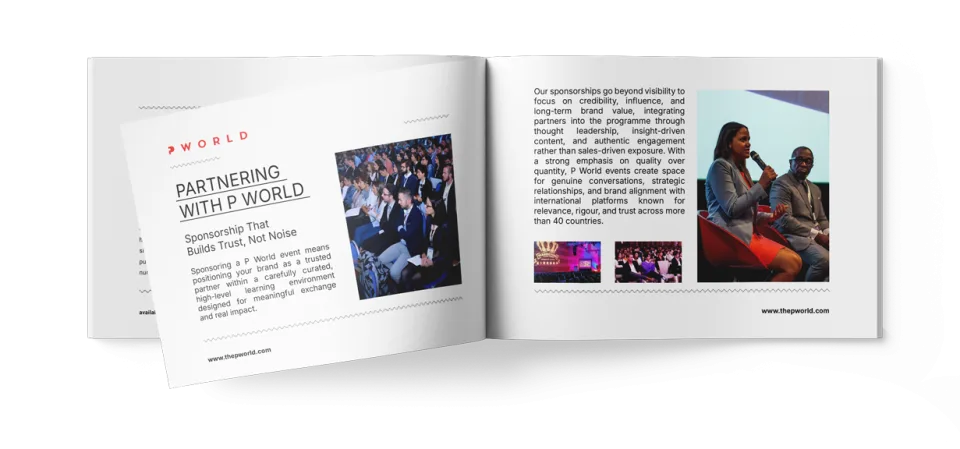
Download our Sponsorship Brochure
Explore all sponsorship packages, benefits, and pricing.

The InterContinental Toronto Centre is a premium luxury hotel situated in the heart of downtown Toronto, seamlessly connected to the Metro Toronto Convention Centre. Renowned for its upscale accommodations and prime location, the property caters heavily to business travelers, conference attendees, and tourists looking for immediate access to major attractions like the CN Tower and Rogers Centre. The hotel features a range of high-end amenities, including a dedicated wellness spa, indoor pool, and fine dining options, all while maintaining the global hospitality standards of the InterContinental Hotels & Resorts brand.

This program can also be delivered as a tailored in-house training for your organization. We adapt the content to your industry, objectives, and level of maturity, focusing on real challenges your teams face and the decisions they need to make. In-house formats allow your people to align on a shared approach, work through relevant scenarios, and build skills they can apply immediately.
If you’re exploring an in-house option, tell us a bit about your team, priorities, and timing, and we’ll recommend the right format.
Contact us about in-house training