








We’re back in Texas.
After five years, the Crisis Communications Boot Camp Austin 2 returns — part of a global training series delivered in over 40 cities, trusted by senior communicators worldwide.
Because when a crisis hits, you don’t get time to think.
You are expected to lead.
This training is built for that reality.
You will learn directly from communications leaders at: Amazon, NASCAR, IBM, Stanford University, Mercedes-Benz U.S. International, Entergy, City of Austin and Flex — people making high-stakes decisions in real time.
Most crisis training tells you what should happen.
This shows you what actually happens — and how to handle it.
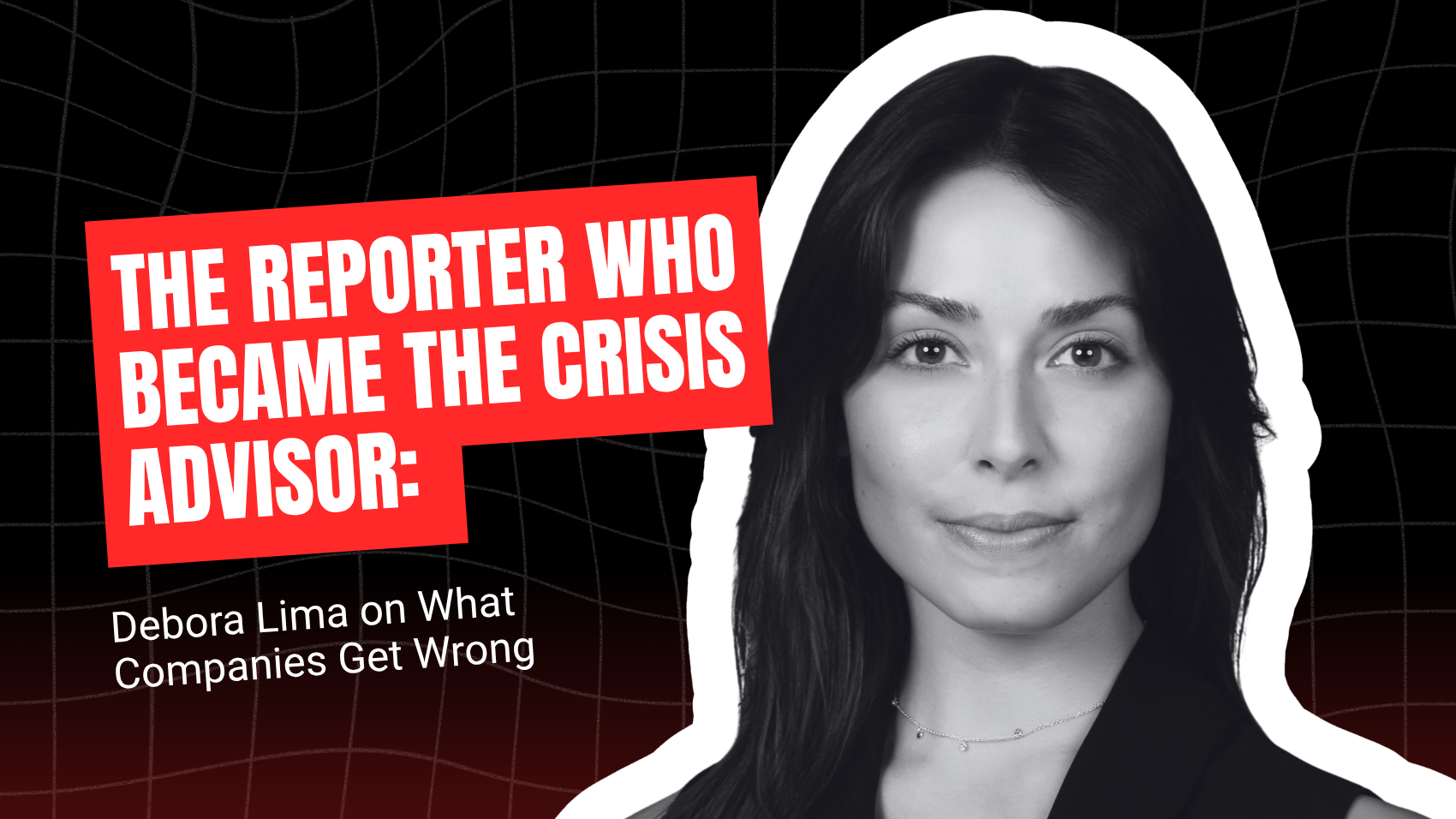
A full-day, hands-on workshop led by Debora Lima, who contributed to the Pulitzer Prize–winning Panama Papers investigation.
You will understand:
So you can respond with speed, clarity, and control.
This is a senior-level, highly interactive training with limited places.
Come with your team and save up to 20%.
 Brochure download
By 2027, reputational risks will be shaped by AI-driven narratives, algorithmic amplification, and declining public trust.
In this keynote, Brent S. Gambill explores the threats already emerging—and how communicators need to rethink crisis readiness. The session will also focus on crisis leadership and decision-making, and what it takes to make fast, high-stakes calls with limited information.
A forward-looking perspective on how to anticipate risk, challenge assumptions, and build a crisis strategy fit for what’s next.
Brent S. Gambill, Managing Director, Track Communications, NASCAR
In the heat of a high-pressure event, the difference between a brand’s recovery and its collapse depends on the quality of leadership at the "top table." Join Kelly Nantel of Amazon to learn how to elevate the communications function from a tactical responder to a strategic powerhouse. You will gain the tools to provide fearless counsel to the CEO, master frameworks for resolving friction when Legal and HR priorities collide, and build executive readiness that ensures your leadership team remains calm and decisive under fire. By the end of this session, you’ll have a blueprint for moving beyond a "plan on the shelf" to create a living culture of preparedness that protects your organization’s reputation from the inside out.
Kelly A. Nantel, Director, Global Media Relations, Amazon
Most crisis plans fail in execution. This session focuses on how to build a crisis communications program that is designed to perform under pressure—from structure and governance to activation and decision-making in real time. We will break down how to define roles, create escalation protocols, align leadership, and embed crisis readiness into everyday operations. Through practical examples, you will see what separates a document from a functioning program—and how to ensure your team is ready when a crisis hits.
Trisha McDonell, Vice President, Public Relations, Flex
The first 60 minutes of a crisis define the outcome. This is where decisions are made with limited information, under pressure, and with long-term consequences. This session breaks down what really happens in that first hour—how leadership aligns, how decisions are made, and where things go wrong. Through real-world examples, we will focus on how to structure your initial response, establish clear decision authority, and avoid early missteps that escalate risk. You will leave with a practical framework to take control fast—and keep control as the crisis unfolds.
Farnaz Khadem, Vice President, University Communications, Stanford University
The City of Austin was hit by a brutal ice storm in late January and early February 2023, leading to days-long—and for some, weeks-long—power outages. This came just two years after Winter Storm Uri, an unprecedented event that brought over six inches of snow to Austin, crippled much of Texas, and became the costliest natural disaster in the state’s history.
Unlike Uri, where the state electrical grid was blamed, the 2023 storm (Ice Storm Mara) was more localized, and responsibility for the outages fell on the City of Austin. With residents still traumatized from Uri, the panic during Mara was immediate and intense. Early communication missteps deepened public distrust. With mounting political and public pressure, the communications team was forced to pivot mid-emergency and completely rethink its approach to crisis and emergency communications. Following the crisis, a new communications approach was formalized, with the next three years focused on rebuilding public trust and strengthening preparedness.
In January 2026, when another ice storm hit the city, the response was widely praised by media, residents, and even long-time critics for how communications were handled throughout the crisis.
Jenny LaCoste Caputo, Deputy Chief Communications Director, City of Austin
In the early stages of a crisis, communicators are often forced to act before the full picture is clear. Information is incomplete, timelines are uncertain, and pressure to respond is immediate. This session explores how to lead with confidence, clarity, and credibility when you don’t yet have all the answers. Drawing on real-world experience from hurricane responses including Laura and Ida, we will examine how to communicate transparently without fueling speculation, how to balance speed with accuracy, and how to maintain trust while the situation is still unfolding. The session will focus on practical decision-making under uncertainty, internal alignment in rapidly changing conditions, and the messaging frameworks that help organizations stay credible when the facts are still evolving.
Brandon Scardigli, Communications Manager, Entergy
In a crisis, you are no longer just managing the message—you are competing with algorithms.
AI-powered search and content engines now decide which version of your story is seen, summarised, and trusted. This session explores how crises unfold in an environment where AI can amplify misinformation, surface outdated narratives, or misinterpret facts at scale. We will focus on how to influence what AI systems “see” and prioritise, how to correct the record quickly, and how to protect your organisation’s visibility when reputation is being shaped by systems you do not control.
Christina Frantom, Former Internal Communications Lead, Mercedes-Benz U.S. International, Inc.
Every issue now demands a response—but not every response is the right one. This session breaks down how leaders decide when to speak and when to stay silent in high-pressure, high-visibility situations. We will focus on how to assess risk, align stakeholders, and avoid reactive decisions that damage credibility. Through real-world scenarios, you will gain a clear framework for making deliberate, defensible choices—so your response is driven by strategy, not pressure.
Adam Pratt, Director, Issues & Government Communications, IBM
In today’s business and media environment, a single local incident can become a systemwide reputational threat before an organization has even completed basic fact-finding. Social media, litigation risk, investor sensitivity, employee concern, and customer expectations can collide in real time, forcing communications leaders to make disciplined decisions with imperfect information.
Join us for an interactive tabletop workshop based on a real-world incident involving a global consumer brand. The scenario touches on key recurring themes in today’s highest-profile corporate crises, including social media virality, hostile shareholder environments, and litigation and regulatory constraints.
The workshop will simulate an event where key aspects of business operations, legal response, and media channels are beyond the direct control of the organization held responsible for the incident. Working in teams, participants will move through the core stages of crisis response—identification, fact-finding, resolution planning, and message development—challenging how key communication principles are interpreted and applied in modern-day scenarios.
By the end of the workshop, participants will return to their organizations with:
About Your Workshop Leader
Debora Lima is an award-winning former journalist and Managing Director of Sensei Advisory, a boutique strategic communications firm within the Millbrook Companies agency group. Sensei applies proprietary, technology-forward solutions to deliver multichannel communications strategies and holistic crisis and issues management programs.
Before transitioning into communications, Debora was a business news reporter. She covered real estate at the Miami Herald, contributing to its Pulitzer Prize-winning Panama Papers investigation, and later reported on startups and venture capital for the South Florida Business Journal.
Debora Lima, Managing Director, Sensei Advisory
Sponsoring a P World event places your brand inside a high-trust environment with influential decision-makers who shape strategy and opinion. Sponsors are positioned as credible partners through meaningful visibility, thought-leadership alignment, and direct engagement, creating lasting brand value beyond the event itself.
Sponsorhip brochure download (162 kB)
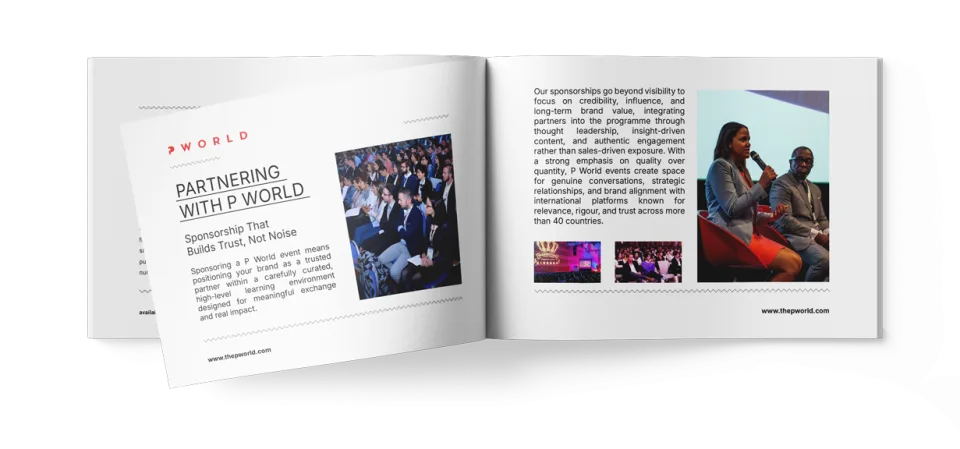
Download our Sponsorship Brochure
Explore all sponsorship packages, benefits, and pricing.

Address: 2403 E 16th St, Austin, TX 78702, United States
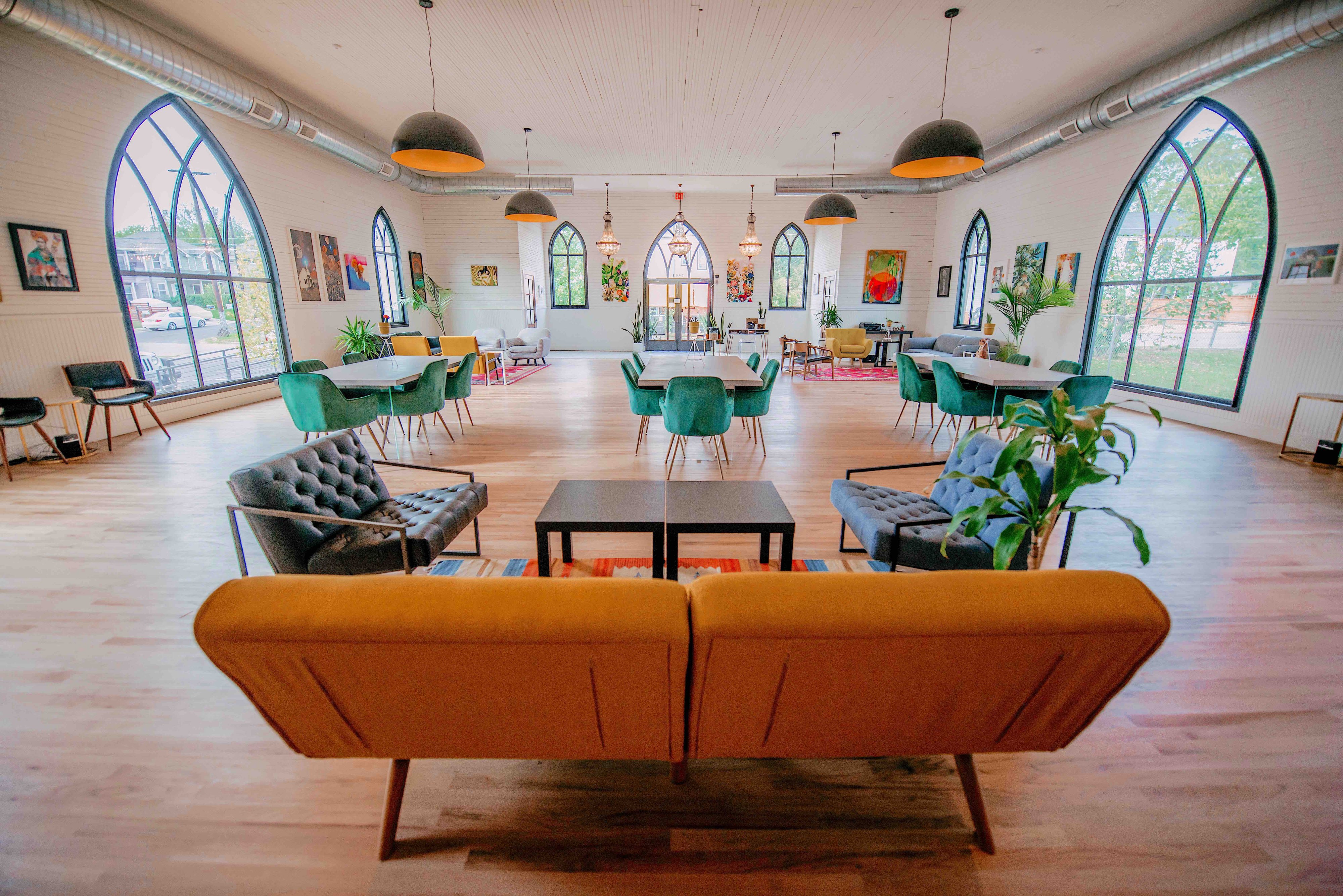
Set in the heart of East Austin, The Cathedral ATX offers a completely different setting for executive-level training. Housed in a restored 1930s church, the venue blends historic architecture with a modern, art-driven interior—creating an environment designed for focus, creativity, and meaningful conversation.
With soaring ceilings, large cathedral windows, and a gallery-style layout, the space is filled with natural light and curated artwork from local artists. It feels intentional and intimate, making it ideal for senior-level discussions where interaction matters more than scale.
The venue accommodates up to 70–75 delegates in a seated format, aligning perfectly with our small-group approach. This ensures strong visibility, easy engagement, and a highly interactive learning experience throughout the program.
Located just minutes from downtown Austin, The Cathedral combines accessibility with a distinctive atmosphere. On-site amenities include integrated AV capabilities, flexible seating arrangements, and dedicated areas for networking and catering.
This is not a traditional conference venue—and that is exactly the point. The Cathedral creates a setting where ideas flow more freely, conversations go deeper, and the overall experience feels elevated from the moment you walk in.
Nearby hotels:
This program can also be delivered as a tailored in-house training for your organization. We adapt the content to your industry, objectives, and level of maturity, focusing on real challenges your teams face and the decisions they need to make. In-house formats allow your people to align on a shared approach, work through relevant scenarios, and build skills they can apply immediately.
If you’re exploring an in-house option, tell us a bit about your team, priorities, and timing, and we’ll recommend the right format.
Contact us about in-house training