








16-17 September 2026
Ottawa
Everyone is talking about AI.
Very few public institutions are using it responsibly at scale.
The AI in Communications Boot Camp for Public Institutions (16-17 September, Ottawa) is the first practical, implementation-focused training in Canada designed specifically for government and public sector communicators.
After successful editions across North America and Europe, this Boot Camp brings together leading public institutions to answer one critical question:
How do you make AI work responsibly inside government communications?
This is not about tools.
It is about building structured, accountable systems that work in real public sector environments.
Designed for communications professionals working in:
Over two focused days, you will:
Learn how AI is being implemented in high-accountability environments:
Day 1 focuses on strategy, governance, and risk, including:
Day 2 is where everything comes together.
A full-day, hands-on executive workshop led by Dr. Alex Sévigny (McMaster University).
You will build your own AI-powered communications workflows, define governance structures, and create a clear implementation roadmap tailored to your organisation.
All attendees receive a Certificate of Attendance from the McMaster University Master of Communications Management Executive Education program, making this not just training, but a recognised executive learning experience.
You will leave with a clear, practical framework to implement AI while protecting trust, transparency, and accountability.
Public sector communicators are being told to adopt AI by leaders who have not traditionally expected data from communications. This opening keynote argues the gap is structural rather than technical, examines what the missing role on a communications team actually does, and closes on the question the next two days exist to answer: so how are we going to do this?
Dino Delic, Head of Data-Driven Communications, Meltwater
Lisa Zhao, Lead, Canadian Public Sector, Meltwater
As public sector institutions adopt AI, privacy is no longer just a legal issue, it is a communications priority that directly impacts trust and credibility. This session explores how AI intersects with personal data, what communicators need to understand about privacy expectations, and how to communicate responsibly when using data driven technologies. You will learn how to address public concerns with clarity and transparency, align messaging with evolving privacy standards, and reduce reputational risk while still enabling innovation. The focus is on helping communications leaders build confidence by demonstrating that AI is used in a way that is secure, ethical, and accountable.
Julia Oosterman, Chief Communications Officer, Communications Division, City of Toronto
Many public sector organizations have defined AI principles, but far fewer have translated them into clear, operational processes. This session focuses on how to move beyond high level commitments and build governance models that work in day to day communications. You will learn how to design practical approval workflows, define roles and responsibilities, assess risk across different use cases, and ensure proper documentation and accountability. The session will also explore how to align communications teams with legal, privacy, and digital functions, while maintaining speed and efficiency. The focus is on giving you a clear, actionable framework to implement AI governance that protects trust, reduces risk, and enables confident use of AI across your organization.
Rob Trewartha, MA, MCM, Director of Strategic Communications and Initiatives, City of Mississauga
When AI moves faster than policy, communications teams are left navigating grey zones. This session shares lessons learned in building guidance that helps professionals make informed, responsible decisions in uncertain situations.
Christian M. Connolly, Manager, Web Services, Indigenous Services Canada | Services aux Autochtones Canada
As AI becomes embedded in public sector communications, the question is no longer whether to use it, but how to use it responsibly, transparently, and in a way that strengthens public trust. This session explores how public sector institutions across Canada are approaching AI governance, policy, and risk, while equipping communicators with practical frameworks to navigate privacy, ethics, and accountability. You will gain a clear understanding of the guardrails shaping AI adoption, learn how to communicate AI use in a way that builds public confidence, and discover how to turn high level principles into clear, actionable processes. The focus is on helping communications leaders lead AI adoption with confidence, ensuring it enhances credibility, protects reputation, and delivers real public value.
Kim Blanchette, MCPRS, APR, Chart.PR, Fellow CPRS, President, Class Action Advisory & Communications, Castlemain and SVP Settlements, Castlemain & SVP Reputation and Training, ChangeMarkers
In an environment where issues escalate in hours, the ability to detect and interpret early signals is a competitive advantage. This session explores how AI can help communications teams identify emerging risks before they become crises, and more importantly, how to turn those insights into strategic action. We will look at governance, prioritization models, and decision-making frameworks that enable teams to act with speed and confidence.
Tristan Lamonica, Director of Digital Strategy, Analytics and Data Sciences, the Parliament of Canada.
Prompting is no longer a niche skill—it’s becoming a core competency for modern communicators. In this hands-on session, you’ll learn how to design highperforming prompts that support every stage of the communications workflow, from ideation to drafting to evaluation.
You’ll explore reusable prompt patterns, guardrails that keep outputs accurate and onbrand, and practical techniques for adapting prompts to your unique mandate, audience, and risk environment. And yes—every prompt you see is yours to steal. You’ll leave with a robust toolkit you can put to work immediately, along with a deeper understanding of how to communicate with AI so it consistently delivers the insight, clarity, and creative lift you need.
Daniel Hebert, Special Advisor (Chief of Staff) to the Director General of Communications, Canada Revenue Agency - Agence du revenu du Canada
As AI rapidly evolves, so does the regulatory landscape shaping how it can be used across government and public institutions. This fireside chat will explore the latest developments in AI policy and regulation in Canada, with a clear focus on what they mean for public sector communicators in practice. You will gain a better understanding of how emerging rules and frameworks could impact your day to day work, from content creation and data use to transparency and accountability. The session will cut through complexity and focus on what matters most, helping you stay ahead of regulatory changes, reduce risk, and communicate with confidence in an increasingly regulated AI environment.
Cam Gordon, Director, Communications, Seneca Polytechnic
Matthew Dillon, Director, Creative Currency
Join Dr. Alex Sévigny for a hands on, full day workshop designed for public sector communications professionals, with a particular focus on the federal context. The session begins with a clear, accessible overview of what AI is, how it is used in organizations today, what public opinion reveals about trust and adoption, and how regulation, governance, and risk are evolving. From there, the day shifts into practical application, where participants will learn structured prompting, explore AI ready communications workflows, and work through realistic exercises using transcripts, data, and common communications tasks. The emphasis throughout is on practical skill building, sound judgment, and responsible use, helping communicators understand where AI can add value, where human oversight is essential, and how to apply these tools effectively in a public sector environment.
Welcome, Baseline Poll and Expectations
Live poll and table discussion to map audience comfort levels, current use cases, and key concerns.
AI Reality Check for Public Sector Communicators
A short talk and discussion to build a shared understanding of what AI is, where it fits, what the public thinks, and what rules matter.
Structured Prompting Lab
A practical session combining teaching and paired practice to develop a reusable prompting framework.
Exercise 1: Transcript to Communications Outputs
Participants work individually or in pairs to turn transcripts into briefing notes, key messages, media lines, social copy, and FAQs.
Debrief
Group discussion focused on prompt quality, verification, and the importance of human review.
Exercise 2: From Data to Insight and Storyline
Small group work using spreadsheets or open text to identify themes, audience insights, risks and opportunities, and develop one clear, defensible storyline.
AI Ready Workflow Redesign Clinic
Group work to redesign a communications workflow, incorporating AI while defining clear human checkpoints.
Governance and Risk Lab
Scenario based session to apply green, yellow, and red use case screening, along with escalation logic.
Department or Team Action Planning
Participants work individually or in groups to create a practical 30 day experiment plan.
Wrap Up and Commitments
Facilitated close with key takeaways and clear next steps.
Dr. Alex Sévigny, Professor of Communications Management, McMaster University

Sponsoring a P World event places your brand inside a high-trust environment with influential decision-makers who shape strategy and opinion. Sponsors are positioned as credible partners through meaningful visibility, thought-leadership alignment, and direct engagement, creating lasting brand value beyond the event itself.
 Sponsorhip brochure download (162 kB)
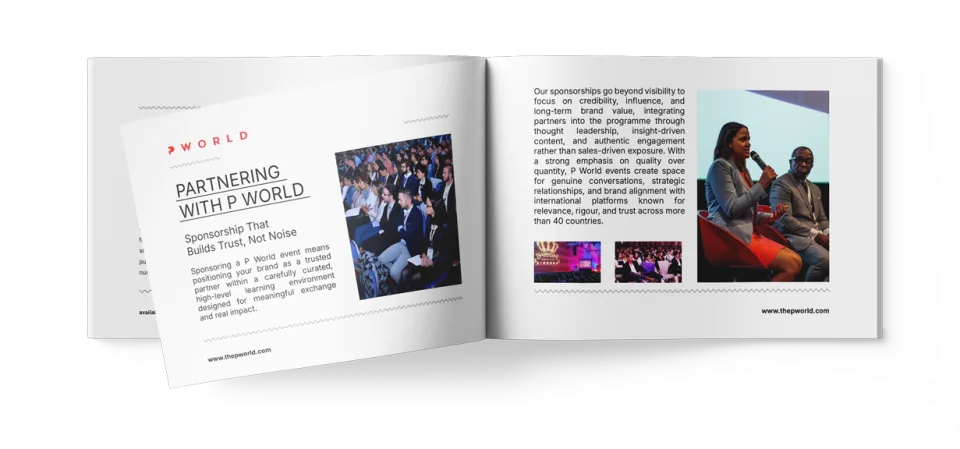
Download our Sponsorship Brochure
Explore all sponsorship packages, benefits, and pricing.

Delta Hotels Ottawa City Centre
Address: 101 Lyon St. N, Ottawa, ON K1R 5T9, Canada
The Delta Hotels by Marriott Ottawa City Centre is a contemporary four-star hotel located in the heart of downtown Ottawa, ideally suited for both business and leisure travellers. Guests benefit from a prime location with a direct indoor connection to Lyon LRT Station, offering seamless access across the city, while major landmarks such as Parliament Hill and the Supreme Court of Canada are just a short walk away.
The hotel features modern rooms with floor-to-ceiling windows and city views, complemented by premium amenities including a large indoor saltwater pool, a 24-hour fitness centre, and a sauna. Dining is a highlight at the on-site Prova Bar & Kitchen, which serves Italian-inspired cuisine and artisanal pizzas.

This program can also be delivered as a tailored in-house training for your organization. We adapt the content to your industry, objectives, and level of maturity, focusing on real challenges your teams face and the decisions they need to make. In-house formats allow your people to align on a shared approach, work through relevant scenarios, and build skills they can apply immediately.
If you’re exploring an in-house option, tell us a bit about your team, priorities, and timing, and we’ll recommend the right format.
Contact us about in-house training