
The Newsroom Has Already Changed
AI has not replaced journalists. It has changed how they work.
Across leading media organizations, generative AI is embedded in daily workflows. It summarizes long reports, assists with transcription, accelerates archive searches, supports data heavy investigations and helps package content for digital distribution. Editorial judgment remains firmly human. But the speed of research, verification and production has increased dramatically.
At the same time, transparency expectations are rising. While most newsrooms are experimenting with AI, audiences overwhelmingly expect disclosure. Trust in the information ecosystem is fragile, and credibility is now linked not only to accuracy but also to openness about how technology is used.
For communicators, this means assuming journalists are AI enabled and that scrutiny will move faster than ever before.
Reputation Is Now Machine Readable
One of the most important insights from Los Angeles was that reputation is no longer shaped only by what people read. It is shaped by what machines summarize.
AI systems draw from search results, Wikipedia entries, community discussions, earned media and owned content. If those signals are incomplete or negative, AI will repeat them confidently. When authoritative sources are updated, AI outputs shift. When digital authority improves, summaries recalibrate.
The strategic implication is clear. You do not optimize the model. You manage the ecosystem that feeds it.
Generative Engine Optimization is quickly becoming core communications infrastructure. Reputation management now extends into the systems that train and inform AI.
AI Is an Accelerant, Not an Autopilot
Across brands and institutions, the pattern is consistent. AI is accelerating workflows, not replacing accountability.
Teams are using AI to polish copy, simulate difficult reporter questions, draft internal announcements, synthesize research and prepare executives for interviews. The productivity gains are real. So is the expectation that human judgment remains in control.
The most mature organizations are not delegating decisions to machines. They are using AI to remove friction so communicators can focus on strategy, creativity and risk assessment.
AI increases speed. It does not reduce responsibility.
Governance Is the Competitive Advantage
In highly regulated sectors, AI adoption is structured, deliberate and cross functional. Governance councils review use cases. Ethics groups assess bias risk. Legal and communications leaders align on safeguards before deployment.
This discipline does not slow innovation. It enables scale.
Communications teams are central to this work. They help define messaging, shape internal policies, set guardrails around privacy and accuracy and anticipate reputational impact.
The organizations moving fastest are not the ones experimenting without limits. They are the ones building strong guardrails early.
Governance is emerging as a differentiator.
Crisis Has Entered a New Era
AI has lowered the cost of misinformation. Synthetic media, manipulated narratives and coordinated digital hostility are no longer fringe risks. They are mainstream threats.
False engagement can be manufactured cheaply. Divisive narratives can spread quickly. Algorithmic amplification increases volatility.
Crisis teams must now monitor AI driven narratives, simulate scenarios in advance and develop verification workflows that operate at digital speed. The response to misinformation cannot be slower than its creation.
AI accelerates productivity. It also accelerates risk.
From Prompts to Systems
Another clear theme was the move from experimentation to structure.
Leading teams are replacing ad hoc prompting with standardized workflows. They define intake criteria, establish approved sources, create structured editing passes and require human checkpoints. AI may draft and refine, but final accountability remains with professionals.
The real breakthrough is not the prompt itself. It is the system around it.
When AI becomes embedded in repeatable processes, it moves from novelty to infrastructure.
The Standard Has Risen
AI has not diminished the communicator’s role. It has intensified it.
Outputs are faster. Expectations are higher. Inconsistencies are easier to detect. Reputational signals travel further and now influence machine generated summaries.
Judgment matters more. Ethical clarity matters more. Governance matters more.
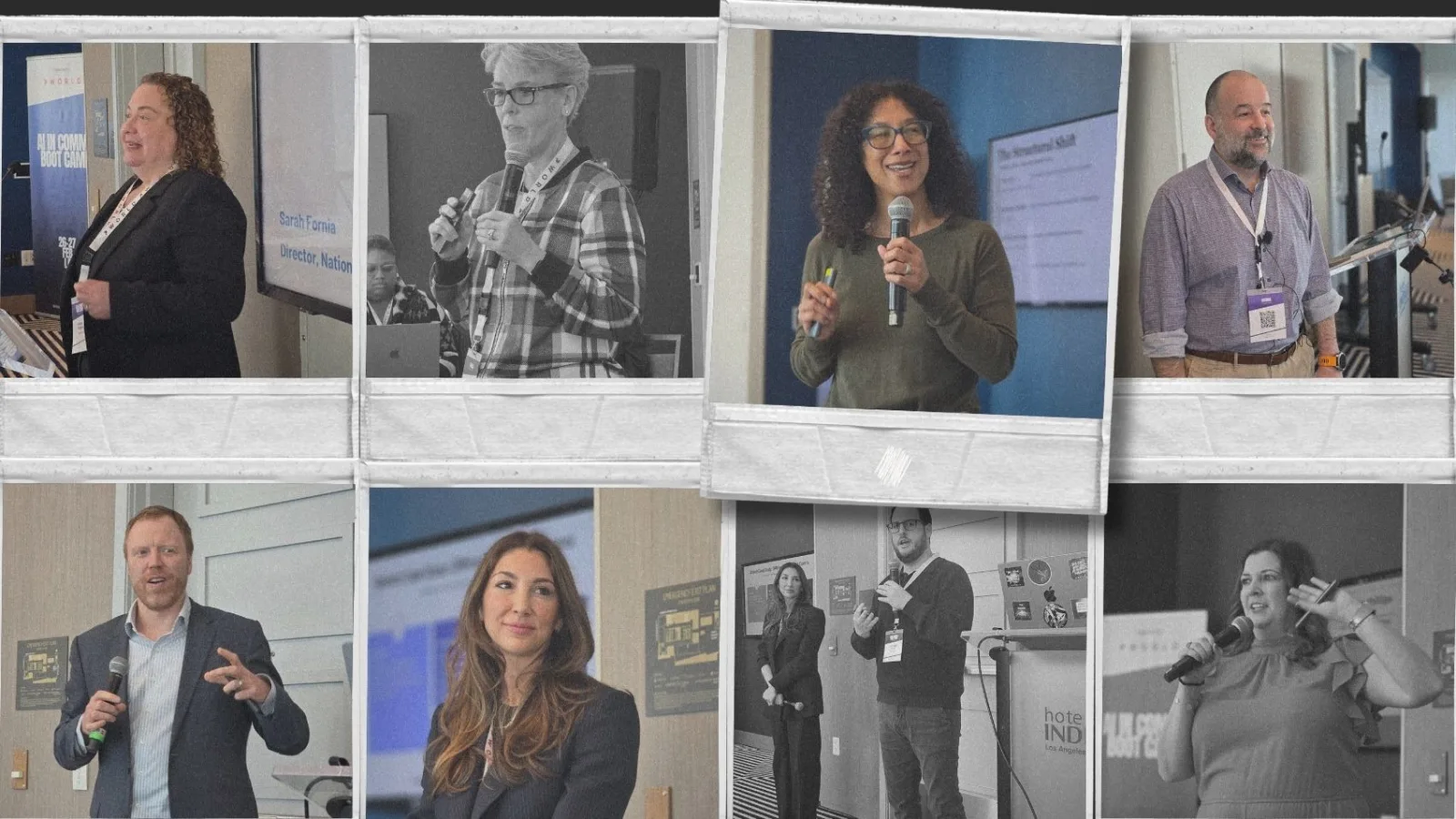
The discussions in Los Angeles made one thing unmistakable. AI is no longer an experiment. It is embedded in how communications functions. And the profession now sits at the center of how it is deployed responsibly.
The next AI in Communications Boot Camps will continue this practical and systems focused approach, taking place on 14 to 15 May in Malta and on 4 to 5 June in Calgary.
The future of communications will not be defined by who uses AI.
It will be defined by who uses it strategically, responsibly and at scale.